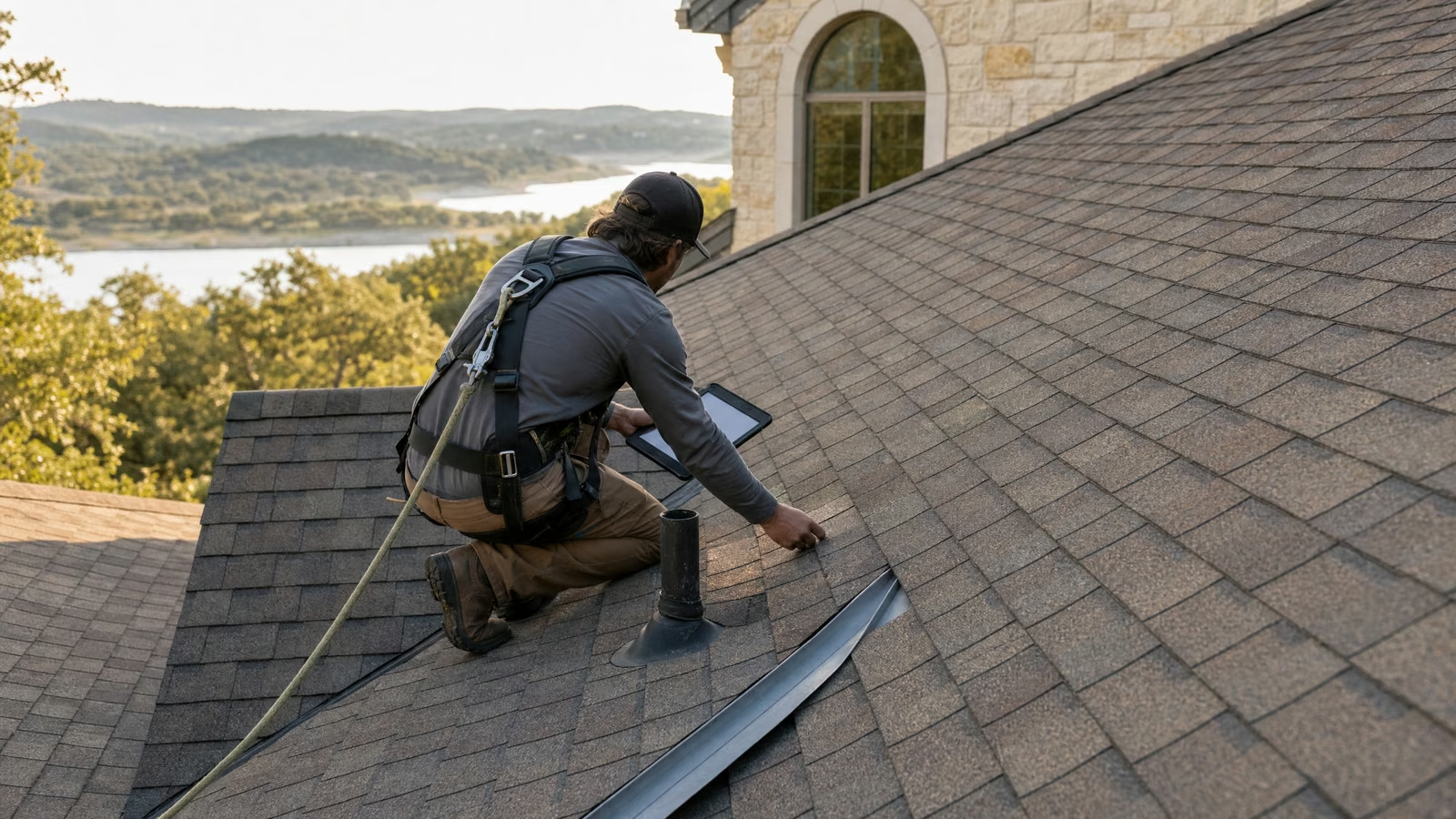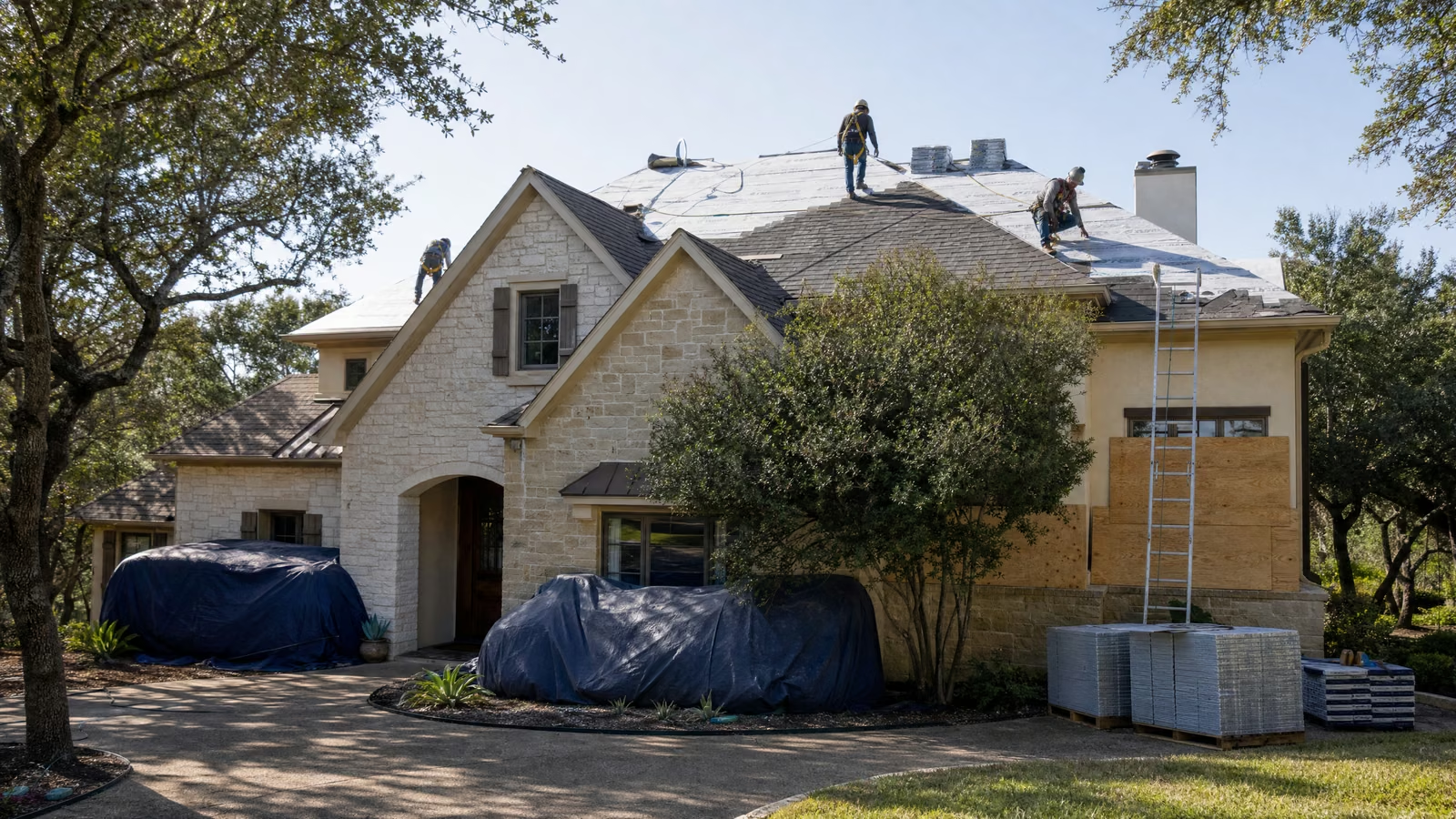
A roof’s history often lives in scattered emails, a contractor’s invoice, and someone’s memory. A simple maintenance record brings those details together. The goal is to make the next service visit easier to prepare for and follow up on, whether your roof was installed last month or its installation date is still unknown.
Create a one-page starting record
List the property address, roof areas, installation date if known, and the contractor who performed the work. Add the roof covering manufacturer, product line, and color when you have reliable documentation. Label uncertain information as unknown or approximate; a useful record does not require filling every blank.
Include separate entries for additions, detached buildings, or roof sections replaced at different times. Keep a short contact list for the roofer and any other companies that regularly work near the roof. Add a note showing where the supporting documents are stored so another household member can find them.
Keep the source documents beside the summary
Save the final scope, paid invoices, inspection reports, product information, warranty documents, and completion photographs. GAF recommends retaining roof inspection and maintenance records. NRCA also encourages regular inspection and maintenance as part of looking after a roof system.
Use a folder structure you will keep using: installation, inspections, service visits, and open questions are enough. Name files with the date first, followed by the subject. Preserve the original documents and photographs, even if you also maintain a shorter summary for quick reference.
Give each visit one clear entry
Record the reason for the visit, who attended, and what was completed. Separate the contractor’s findings from your own observations. An invoice for a service call may not tell the whole story, so ask for a short written account when the work or recommendation is unclear.
Finish each entry with the next action and the person responsible. If no further work was recommended at that visit, record that along with the date and the source of the recommendation. Keep unanswered questions visible until someone has addressed them.
- Date, contractor, and reason for the visit.
- Roof area or component involved.
- Findings and work completed, with the supporting document name.
- Photographs or product details supplied.
- Next action, responsible person, and agreed follow-up date.
Add ordinary observations safely
If you notice a change from the yard or inside the house, add a dated note and a photograph from a safe position. Useful entries might describe visible debris, a drainage concern, or a new mark indoors. Record what you can see without assigning a cause you have not established.
Stay on the ground for exterior observations. Do not climb up or disturb roof materials to improve the record. If something needs closer assessment, arrange professional help. Your file should support that visit, not become a reason to attempt an inspection beyond safe access.
Set reminders from actual guidance
Ask your contractor what follow-up is appropriate for the roof’s materials, condition, surroundings, and any existing concerns. Read the maintenance instructions supplied for your products and retain the relevant warranty terms. Put agreed dates in your calendar with a link to the document or recommendation behind them.
After any new work near the roof, update the file even if a roofing company was not involved. Record the company, date, and location of work, then keep its paperwork. When you sell the property or change contractors, this organized history can be handed over without relying on memory or reconstructing years of emails.
Sources & further reading
- NRCA consumer advisory: roof system maintenance
- GAF: roof maintenance and keeping records
- NRCA: safe ground-level observations
General homeowner guidance. Conditions, product instructions, and the agreed scope vary by property. An inspection is needed to understand your roof.