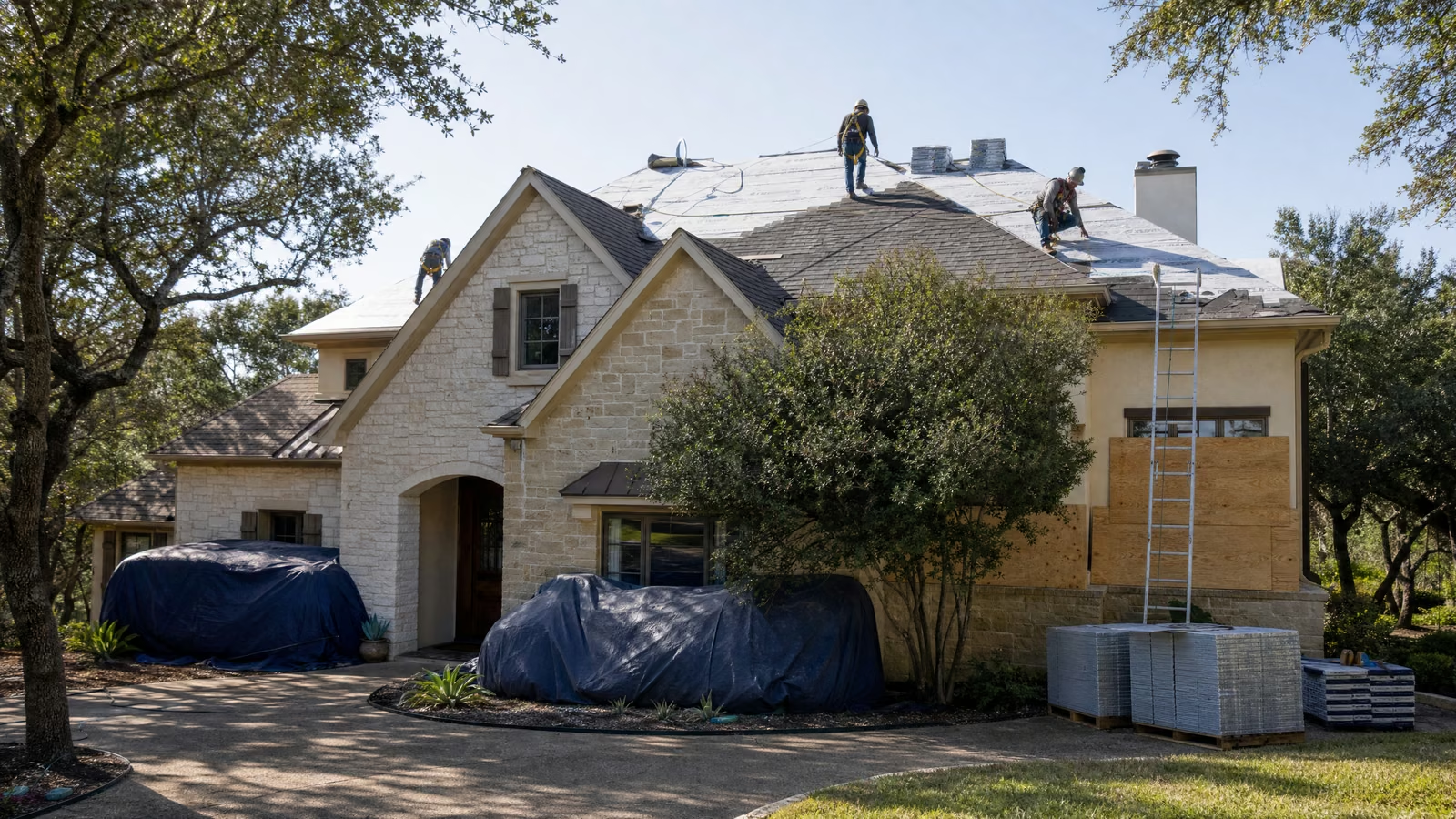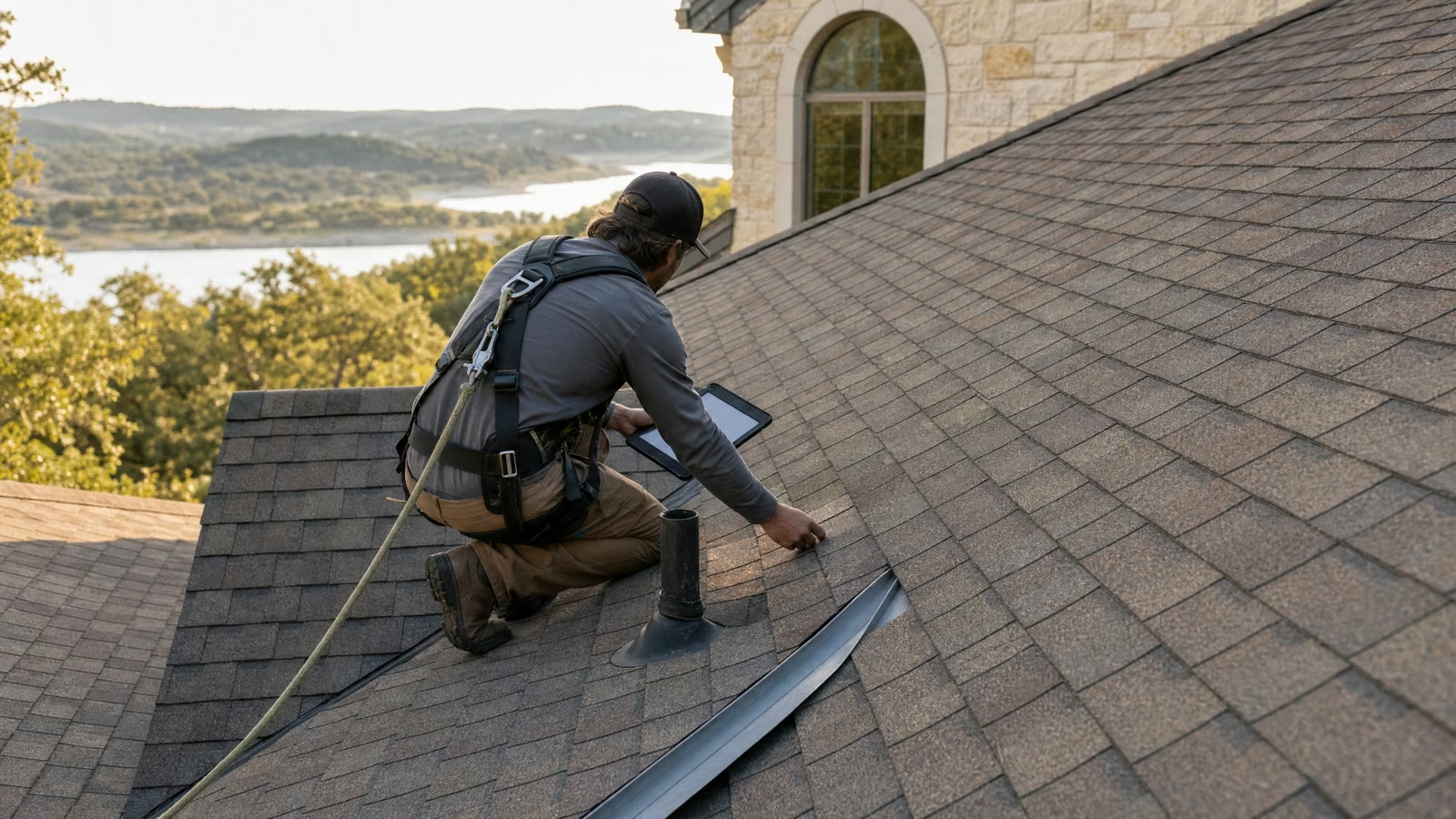
A roofing conversation often starts with shingles, tile, or metal panels. It should also reach the places where those materials meet something else. Flashing helps manage water at these junctions. Knowing a few terms can make a contractor’s explanation easier to follow without turning you into the person responsible for diagnosing or repairing the detail.
Follow the junctions around the house
Flashing is material, often metal, used to direct water at vulnerable roof connections. Typical locations include the meeting between a roof and a wall, the perimeter of a chimney, and openings for skylights or pipes. The specific arrangement depends on the roof covering and the adjoining construction.
Start your conversation with locations rather than product names. Ask the roofer to identify the junctions present on your home using an overview photograph. Give each one a familiar label, such as the chimney above the living room or the wall beside the garage. That makes later questions easier to connect to a specific area.
Learn the names you are likely to hear
On many shingle roofs, step flashing uses successive pieces along a sloping roof-to-wall connection. Counterflashing covers the upper edge of another flashing component, often at masonry. A pipe boot is a flashing assembly around a pipe passing through the roof. These terms describe different jobs; they are not interchangeable repair options.
Ask the contractor to point out which components apply to your property and explain what can actually be seen. Some portions sit behind the roof covering or wall finish. A photograph may show one visible edge while leaving the rest of the assembly concealed.
Ask what was observed before discussing a fix
If the recommendation mentions flashing, ask for a plain description of the condition. Where is the concern? Is a piece visibly damaged, displaced, deteriorated, or difficult to assess? What evidence links that condition to the problem you reported?
Keep an open question separate from a confirmed finding. ‘Further investigation needed at the chimney’ tells a different story from a documented defect with a defined repair. Ask what additional access or investigation would resolve the uncertainty and whether that step is included in the proposed work.
Make the scope specific to the connection
The phrase ‘repair flashing’ leaves room for several interpretations. Ask which location and components it covers, what will be removed, and how the work will connect to the surrounding roofing and wall materials. If siding, masonry, or a skylight is involved, establish who handles that part of the work.
For a replacement project, ask which existing components will be replaced and which, if any, are proposed to remain. Request the reason for that decision and any limits on what can be confirmed before removal. A scope tied to identified locations is easier to review than a broad promise about every detail on the roof.
- Which junction does this line item address?
- What condition supports the recommendation?
- What adjoining material must be accessed or restored?
- What is included, and what would require separate approval?
Leave the investigation and installation to the roofer
Use contractor photographs and safe ground-level views to understand the proposal. Do not climb up, lift roof materials, or add sealant to test an explanation. NRCA advises homeowners to have professional contractors handle closer roof assessment and repairs.
After the work, request photographs of the addressed locations and a written description of what was completed. Keep them with the final invoice. If the original concern returns, those records give the next conversation a useful starting point: the same location, the earlier finding, and the work already performed.
Sources & further reading
- GAF: roof flashing functions and common types
- NRCA: contractor proposals and flashing work
- NRCA: safe observations and professional roof assessment
General homeowner guidance. Conditions, product instructions, and the agreed scope vary by property. An inspection is needed to understand your roof.